Skip to content
MEU RECIFERECIFE · PERNAMBUCO
The city portal for Recife and PernambucoNEWS · EVENTS · SERVICES
Cultural atlas

Religious heritage · Olinda / Varadouro

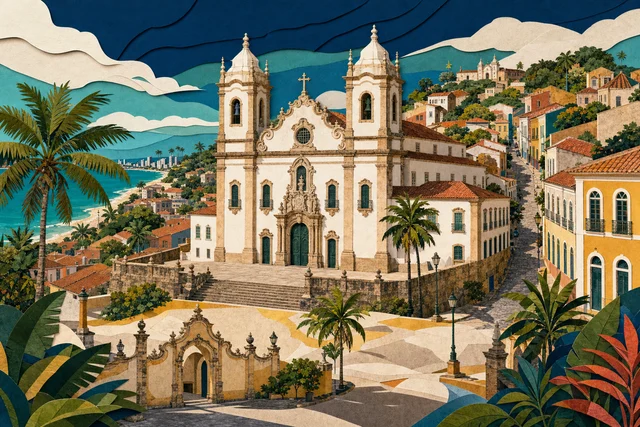
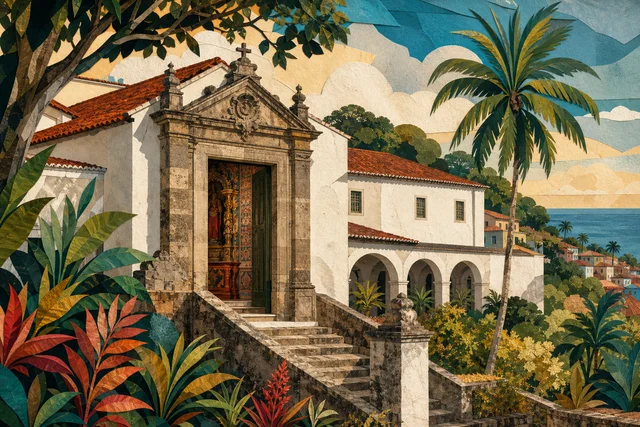
Monastery of Saint Benedict in Olinda

Benedictine complex rebuilt after the Dutch period, notable for its altarpiece, gilded carving and educational history.
2 sources and traceabilityVerified 2026-07-28
01

The second Benedictine house in Brazil

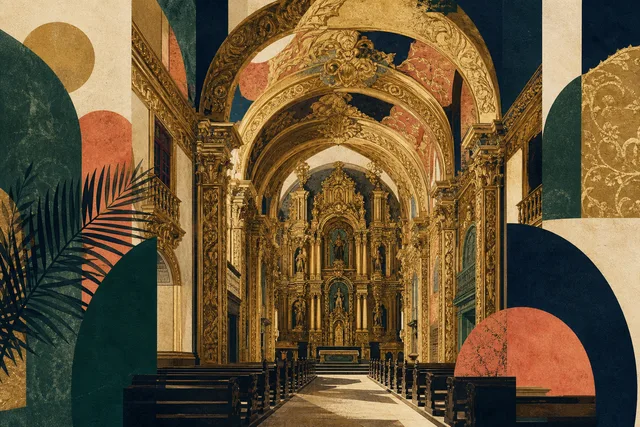
The São Bento monastery in Olinda is the second Benedictine foundation on Brazilian soil, and it is a rare case where historical primacy comes with preserved artistic quality. The main reason to come is the chancel of the monastery church: its baroque gilded woodwork is considered among the most beautiful in the country, and the high altar ranks with the finest examples of the craft in Brazil.

But treating the monastery only as a showcase would be wrong. This is a working religious house with a monastic routine, so access follows the schedule of services and the silence belongs to the rule rather than to museum etiquette. Come calmly, aware that you are a guest of a community present here for more than four centuries.

In practice the visit is not planned like a museum: hours depend on services, silence is expected and part of the complex is reserved. In exchange, anyone who times it well hears chant inside the very interior they came for.

02

1586, 1632, 1654, 1759

Construction began in 1586, and in 1597 the monks acquired a site known as Olaria, completing the monastery works in 1599. On 25 November 1632 a fire set during the Dutch presence destroyed the building, a layer of urban history that left marks on almost every old structure in Olinda.

Rebuilding began in 1654 and was completed in 1759, when the complex took on its baroque character. In the mid-eighteenth century the monastery was rebuilt and decorated after the manner of the Tibães monastery in Portugal. The historic centre of Olinda, São Bento included, was listed by Iphan in 1968 and later recognised as a UNESCO World Heritage site.

Compare the dates with the town's history: the 1632 fire falls in the Dutch period, while completion in 1759 belongs to a time when Olinda had already lost primacy to Recife.

03

Gilded woodwork and monastic complex

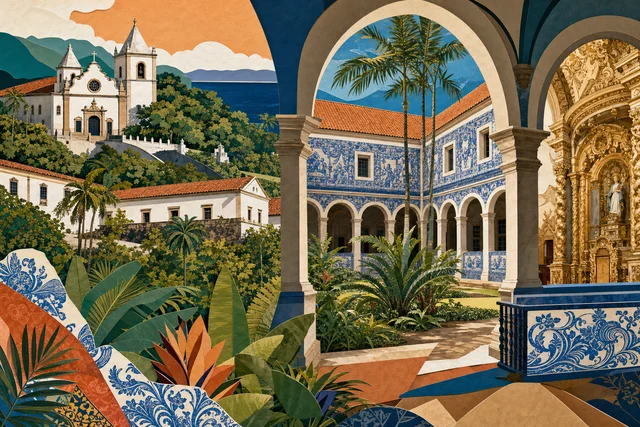
The artistic core is the chancel, where baroque gilded carving covers the surfaces like a continuous tapestry. The pulpits are also of gilded woodwork, crowned by baldachins with canopies. These elements gave the monastery its reputation for holding one of the finest baroque interiors in Brazil, and they reward slow looking.

The second part of the complex is the monastery itself, with courtyards, galleries and service rooms arranged in the Portuguese manner. The plan explains monastic life: an enclosed cloister, circulation along galleries, a separation of shared and private spaces. Access varies from area to area, and that has to be checked on site.

Note the materials as well, because gilded woodwork in the tropics demands constant maintenance, so its condition depends on continuous restoration rather than original quality alone.

04

How to look closely

Start at the chancel and give your eye time, because baroque carving was made for prolonged looking and its logic emerges through repeated motifs rather than isolated details. Notice how the gilding works with light, since in a tropical church with restrained openings it is reflected light that makes the carving legible.

Then look at the pulpits and their baldachins, and afterwards at the organisation of the nave. Compare this interior with the plainer parish churches of the town: the difference comes from resources and function rather than taste. And watch the passages between church and monastic rooms when open, because the change of scale and finish is striking.

Look at the floor and the base of the walls, where marks of damp and repair show how the building copes with the climate.

05

Varadouro and the lower town

The monastery stands in Varadouro, in the lower part of the historic centre, which matters for a route: most visits to Olinda begin at the top, at the Sé, and São Bento naturally comes near the end of the descent. The streets here are wider than on the hill and the houses keep their colonial scale.

Around it continues the ordinary life of the town, with shops, houses and workshops, a setting that prevents the monastery from becoming an isolated attraction. Walking down from the top through the ladeiras is the central Olinda experience. Allow for the terrain: descending is easier than climbing, but the paving is the same and the way back can tire you.

In the lower town water, coffee and shade are easier to find than up at the cathedral, so plan your break here.

06

Monastery, war and colonial economy

The fire of 1632, during the Dutch presence, is a reminder that religious buildings in the colony were not only temples: they were targets in a conflict between European powers disputing control of the sugar economy.

There is a second, less visible layer. Religious houses of the period belonged to the same economy as the estates, and the labour of enslaved people also sustained the building and upkeep of monasteries. The gilded carving we admire was paid for out of that system's income. Recognising artistic value does not require silence about this, and an honest visit keeps both sides in view.

Remember that the Benedictines ran schools and estates, so the monastery was a spiritual, economic and educational centre at once.

07

Planning the visit

Confirm the hours in advance, because this is an active religious house where visiting happens outside services and the schedule shifts with the liturgical calendar. Allow thirty to forty minutes for the church, enough to study the chancel and the pulpits without rushing.

The ideal day begins at the top, at the Sé, descends the ladeiras, passes other churches and ends at São Bento, keeping energy for the return. Dress appropriately for entering a working church and remember that photography is not always permitted. If Gregorian chant is scheduled that day, plan the visit around it.

If you come specifically for the interior, confirm beforehand that the church is open and no works are under way, since restoration campaigns are frequent.

08

Getting there and access

The monastery lies in Varadouro, in the historic part of Olinda, about seven kilometres from central Recife. The simplest approach is a taxi or a bus to Olinda followed by a walk; by car, expect narrow streets and limited parking.

The complex is historic: the church entrance and internal passages may have steps and thresholds, and the surrounding paving is uneven. Wheelchair access, staff assistance and entry to particular areas should be confirmed in advance. The lower town is gentler than the hill, but the climb back up remains demanding in the heat.

Avoid planning the climb back to the Alto da Sé at midday, because ladeiras and stairs in the heat are demanding.

09

Where to go next

The natural continuation is the other churches of the historic centre and the climb to the Alto da Sé, if you began at the bottom. In the reverse direction the route ends with the panorama, a good close to the day.

To change register, go down to the lower town and its studios or head for old Recife, because Olinda's colonial monastery and Recife's port buildings show two sides of the same era. Anyone staying longer does well to return to Olinda on a different weekday, since the character of the town changes considerably.

Keep the central idea: Olinda is seen as one ensemble rather than a list of separate sights.

10

Verified facts

Every fact below is linked to this profile’s source codes.

Location
Varadouro · Olinda
OLINDA_CHURCH · MTUR_OLINDA
Listed address
Rua de São Bento, s/n
OLINDA_CHURCH · MTUR_OLINDA
Documented focus
Benedictine complex rebuilt after the Dutch period, notable for its altarpiece, gilded carving and educational history.
OLINDA_CHURCH · MTUR_OLINDA
Evidence basis
Identity, location and cultural relevance are supported by primary evidence.
OLINDA_CHURCH · MTUR_OLINDA

Original Meu Recife editorial copy based only on this profile's source codes. It does not reproduce third-party text in full or turn a community-guide opinion into fact.

11

Before visiting

This is a working Benedictine monastery: visits happen outside services and the schedule depends on the liturgical calendar, so confirm the hours in advance. Dress appropriately for entering a church and remember that photography is not always allowed. The complex is historic, so arrange accessibility before your visit.

Reference address
Rua de São Bento, s/n, Varadouro, Olinda — PE
Religious heritage
30–60 min
What can change
Hours, tickets, accessibility and temporary closures can change. Confirm with the official source before visiting.
12

Getting there

Coordinates cross-checked against multiple mapping sources

Reference address
Rua de São Bento, s/n
District and city
Varadouro · Olinda, PE
Verified coordinates
-8.019889, -34.851752
The interactive map will load as you scroll
Location map for Monastery of Saint Benedict in Olinda
Coordinates cross-checked against multiple mapping sources · map © OpenStreetMap