Religious heritage · Recife / Bairro do Recife
Madre de Deus Church

A working church in the port quarter
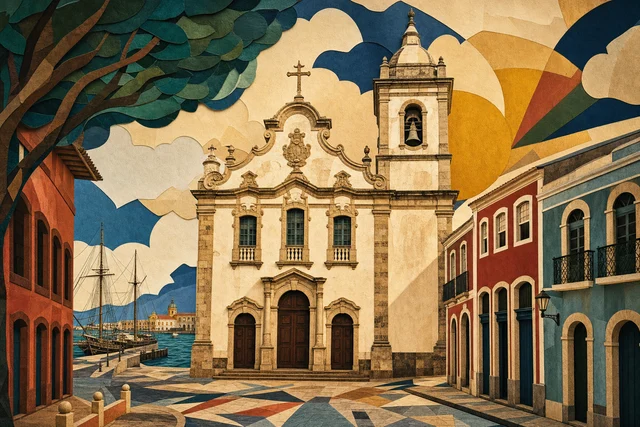
The Madre de Deus church is one of the most striking historic temples in the Recife district, built in the colonial period and standing beside the port. In a block known today for bars and cultural institutions, it is a reminder that the port island began as a place of work, trade and faith at once.
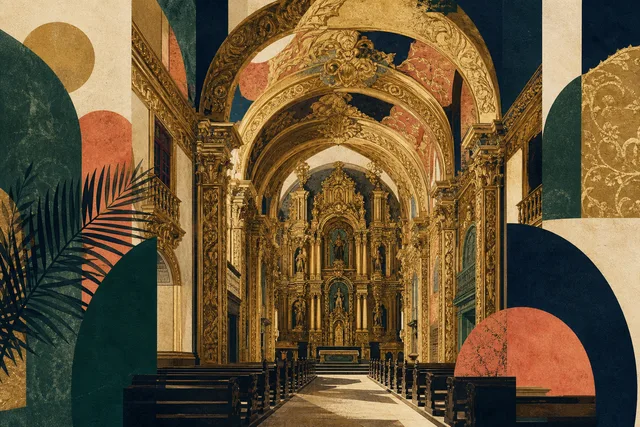
The church stands out for its imposing architecture and for the artistic detail of its interior, reflecting the religious and cultural tradition of the city. It remains in use, receiving parishioners as well as visitors, which changes the character of a visit.
The temple belongs to the Recife Sagrado route, a city project that gathers places of faith into a self-guided walk through the historic centre. For a visitor it is a practical way to see a system rather than a single building.
Come respecting the routine of the house, because its visiting hours are its own and do not match museum times. That contrast between a busy street and a silent nave is part of the district's experience.
A colonial temple in a living district
The building belongs to the colonial period, when the port island was the commercial and administrative core of Recife and orders and brotherhoods raised their own churches, competing for space and influence.
In later centuries the district changed: the port was reconfigured, houses became offices and warehouses, and in the second half of the twentieth century the area emptied out, a decline reversed from the 1990s and 2000s.
The church passed through all those cycles in use, which is rare, since many historic buildings in the block changed function or stood empty in the same period.
Today it exists as monument, parish and stop on a tourist route, three roles that do not always coexist without tension.
What is inside
The essential thing is the interior, with artistic detail reflecting the tradition of colonial sacred art in Pernambuco. In churches like this, value is distributed among the chancel, side chapels, carving, painting and objects of worship.
Notice the scale: the church was built for a parish rather than pilgrim crowds, so the space reads whole from one point and the details stand out.
As in any active church, some objects are in use rather than displayed, so what you see depends on the day and on whether a service is running.
There is no permanent museum display, and that is consistent: the point of the building is that it still works. A church in use shows more than a monument that has only been conserved.
How to look closely
Start outside, because façade and volume read best from a short distance, and the dense surrounding houses show how the church fits into a commercial block rather than commanding a square.
Inside, let your eyes adjust to the light, since the openings are restrained and details emerge gradually. Study the chancel, the side chapels and the treatment of surfaces.
Look for marks of different periods, repairs, replacements and later additions, inevitable in a working church and revealing of how the parish maintained the building.
And keep quiet, because some of the people entering come to pray rather than to look.
The Recife district around it
The church stands on Rua Madre de Deus in the port district, close to the main points of the old town: Marco Zero, Rua do Bom Jesus, Torre Malakoff and Paço do Frevo are minutes away.
The port sets the character of the street: offices and shops by day, bars and events in the evening, with tourist flow added at weekends.
In a route the temple fits well between secular stops, because it offers a pause and changes the rhythm of the walk.
Note that the church is already closed in the evening, so it belongs to the daytime part of the itinerary.
The church inside the port economy
Colonial churches in Recife were raised in a city living on sugar exports and financed by that economy, sustained by the labour of enslaved people. Recognising artistic value does not dispense with the question of who paid for the work.
The second layer is religious monopoly: Catholic churches rose in an order where other confessions were persecuted or existed only in brief periods of tolerance, like the Jewish community on the neighbouring street in the Dutch years.
The third is contemporary, because maintaining a historic temple in a tropical climate costs more than a parish collects, which makes such buildings dependent on public programmes.
Looking at the church with all three lines in mind is the more honest approach.
Planning the visit
The visit is short: twenty to thirty minutes is enough to see the interior without rushing. Place it in the daytime part of your route, because opening is concentrated on weekdays in business hours.
According to official information the church opens Monday to Friday in the morning and afternoon with a break, but the schedule may change and is worth confirming on the day.
Dress appropriately for entering a working church and check in advance whether photography is allowed, since rules vary between parishes.
Combine the visit with Rua do Bom Jesus and Praça do Arsenal, two or three minutes away.
If you are following the Recife Sagrado route, start the day here, because the temples of the centre open and close early and work better before the museums. Fifteen to twenty minutes is enough to look calmly without disturbing anyone.
Getting there and access
The reference is Rua Madre de Deus in the Recife district. From Marco Zero it is five to seven minutes on foot, buses serve the block, and by car you should expect paid car parks that fill in the evening and on event days.
The building is historic, so the entrance may have steps and thresholds and internal circulation is narrow. Wheelchair access and assistance should be confirmed with the parish in advance.
The paving around it is uneven and slippery after rain, so wear stable shoes.
Remember that the church closes before the district comes alive, so it cannot be fitted into an evening programme.
Where to go next
The nearest continuation is Rua do Bom Jesus, with the synagogue memorial and coloured façades, and then Praça do Arsenal with Torre Malakoff and Paço do Frevo.
To extend the religious line, the Recife Sagrado route connects temples of the centre into a self-guided walk.
Towards the water lie Marco Zero and the crossing to the Sculpture Park, and a little further Cais do Sertão.
A good daytime combination gathers temple, street, square and water, filling three to four hours and covering most of the old town. The density of stops in the block lets you build the whole route on foot.
Verified facts
Every fact below is linked to this profile’s source codes.
- Location
- Old Recife · Recife REC_1DAY · IPHAN_PE
- Listed address
- Rua Madre de Deus, s/n REC_1DAY · IPHAN_PE
- Documented focus
- Historic temple linked to the port landscape and religious heritage of the Recife neighborhood. REC_1DAY · IPHAN_PE
- Evidence basis
- Identity, location and cultural relevance are supported by primary evidence. REC_1DAY · IPHAN_PE
Original Meu Recife editorial copy based only on this profile's source codes. It does not reproduce third-party text in full or turn a community-guide opinion into fact.
Before visiting
This is a working parish church with its own hours: according to official information it opens on weekdays, morning and afternoon with a break, which is worth confirming on the day. In the evening it is already closed, so plan it into the daytime part of your route. Dress appropriately and check whether photography is allowed.
- Reference address
- Rua Madre de Deus, s/n, Bairro do Recife, Recife — PE
- Religious heritage
- 30–60 min
- What can change
- Hours, tickets, accessibility and temporary closures can change. Confirm with the official source before visiting.
Getting there
Coordinates cross-checked against multiple mapping sources
- Reference address
- Rua Madre de Deus, s/n
- District and city
- Bairro do Recife · Recife, PE
- Verified coordinates
-8.064279, -34.873920