
Museum of the People of Northeast Brazil
Joaquim Nabuco Foundation Museum dedicated to the social formation, daily life, arts and cultures of the people of the Northeast.
Cultural atlas · Recife + Olinda

Joaquim Nabuco Foundation Museum dedicated to the social formation, daily life, arts and cultures of the people of the Northeast.

Municipal equipment dedicated to the work of Murillo La Greca and modern and contemporary artistic production.
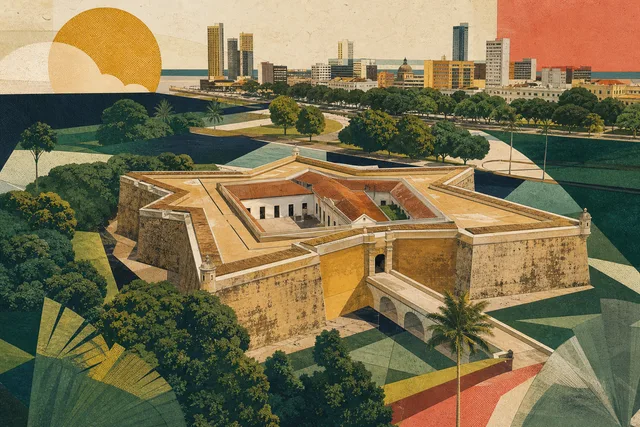
Urban history museum installed in a fortification of Dutch origin, with an iconographic and documentary collection about Recife.

Listed historic fortification, today linked to military memory and the origins of the Army in the Northeast.

Municipal museum of modern and contemporary art, with exhibitions, research, training and educational activities.
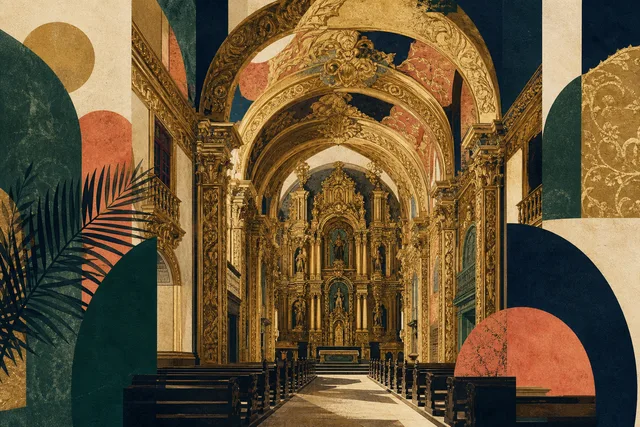
Part of the Franciscan complex in Recife, famous for its baroque gilded carvings and collection of sacred art.

Preserved residence of Gilberto Freyre, with library, furniture, personal objects, gardens and intellectual memory.

A museum-studio in a former ceramics factory where architecture, tropical gardens and Francisco Brennand’s work form a single environment.

Museum complex with a picture gallery, library, weapons collection and an important collection of works linked to Dutch Brazil.

State museum in a historic mansion, with collections of archaeology, art, history, indigenous, Afro-Brazilian culture and sacred art.

Federal museum dedicated to the memory of slavery, abolition, resistance and Afro-Brazilian cultures.
Research institution with documentation, library and collections linked to the history and formation of Pernambuco.

Collection dedicated to northeastern folk art, with works made of wood, clay, plaster and other artisanal traditions.

Immersive museum about the sertão, its music, landscapes, religiosity and ways of life, with Luiz Gonzaga as the narrative axis.

Municipal training, research and memory center dedicated to Carnival and popular culture manifestations.

Former monument portal from the 19th century converted into a cultural, exhibition and astronomical dissemination space.

Jewish memory center on the site associated with the first synagogue in the Americas, with archaeological remains and historical narrative.

A centre for memory, documentation, learning and live experience devoted to frevo, a cultural heritage of Brazil and humanity.

Space for memory and research on Chico Science, his work and the Manguebeat movement.

Center for the preservation, research and dissemination of the work of Luiz Gonzaga and the musical traditions of the Northeast.

Railway museum in an old station, with locomotives, equipment and memories of the Pernambuco railways.

Space dedicated to artistic languages and Afro-Brazilian cultural references.

A nineteenth-century neoclassical theatre, nationally protected and central to Recife’s cultural and civic history.

Historic theater opened in 1842 and integrated into the Apolo-Hermilo performing arts training and research center.

Flexible configuration room linked to the Apolo-Hermilo complex and training and experimentation in performing arts.

Historic theater-cinema in the Center, restored and reinserted into Recife's cultural programming.

Historic street cinema and reference space for exhibitions, festivals and special sessions.

Historic urban complex organized around the São Pedro dos Clérigos Concathedral and houses occupied by popular culture facilities.

Recife Antigo’s principal civic square and the symbolic starting point for Pernambuco’s road distances, opening directly onto the waterfront.

Historic crossing along the axis of one of the first great bridges of the Dutch period, today a central element of the river landscape.

A street of historic houses tied to Jewish presence, port trade and the changing urban fabric of Recife Antigo.

Set of sculptures by Francisco Brennand installed on the jetty, with the Crystal Column as a visual landmark.

Historic temple linked to the port landscape and religious heritage of the Recife neighborhood.

Teatro do Parque Dona Lindu with a reversible solution for indoor and outdoor performances.

Historic garden associated with Burle Marx, surrounded by the Santa Isabel Theatre, Palace of Justice and Palácio do Campo das Princesas.

Urban complex recognized by UNESCO, combining topography, gardens, houses, convents and baroque churches.

Historic cathedral dominant in the landscape of Olinda, with successive reconstructions and important Mannerist and Baroque elements.

Benedictine complex rebuilt after the Dutch period, notable for its altarpiece, gilded carving and educational history.

First Franciscan establishment in Brazil, with cloister, chapels, carvings and extensive panels of Portuguese tiles.

Church of 16th century origins rebuilt in Baroque style, with carvings, paintings and churchyard elevated over the city.

Landmark of Carmelite implantation in the Americas, rebuilt in Baroque language and integrated into the entrance to the historic site.

Temple linked to the Brotherhood of Brown Men, rebuilt after 1631 and marked by side altars and gilded carvings.

Temple of the black brotherhood of Olinda, associated with religious practices and celebrations of African origin in the colonial period.

Set in the former Jesuit College, an essential reference of 16th century religious architecture in Brazil.

One of the oldest religious buildings in Olinda, with a sober appearance and today linked to the female Benedictine community.

Former women's retreat of 16th century origin, with paintings, polychrome, carvings and Portuguese stone elements.

17th century temple built by brown men and linked to one of the first Brazilian devotions to Our Lady of Guadalupe.

Museum located in the old Aljube and Capela de São Pedro Advíncula, bringing together a wide collection of modern and contemporary art.

Museum in the former Bishops' Palace, with imagery, paintings, liturgical objects and erudite and popular sacred art.

Museum dedicated to mamulengo and master puppeteers, preserving characters and techniques from popular puppet theater.

Historic house with furniture, sacred art and objects linked to the domestic, political and religious life of Olinda.

Colonial market today associated with galleries, workshops and production by local artisans and artists.

Former factory located in the area of the first customs house, converted into equipment for exhibitions and presentations.

Modernist landmark from 1934 associated with the pioneering use of cobogó, later adapted as a panoramic viewpoint.

Emblematic meeting of streets, houses and cultural life, especially associated with the Olinda Carnival processions.

Municipal archive with textual, cartographic, iconographic documentation and rare works linked to the administration and history of Olinda.

Library of imperial origin installed in a historic house depicted in Dutch iconography of Olinda.

Small coastal fortification of 17th century origin, with a ramp, guard houses and cannons aimed at defending the coast.

Vertical landmark of coastal landscape; The current lighthouse was opened in 1941 on Morro do Serapião.

Colonial fountain mentioned in Olinda's charter, with a stone staircase and the city's historic coat of arms.
Automatic translations are identified on each profile.