Skip to content
MEU RECIFERECIFE · PERNAMBUCO
The city portal for Recife and PernambucoNEWS · EVENTS · SERVICES
Cultural atlas

Religious heritage · Olinda / Guadalupe

Our Lady of Guadalupe Church
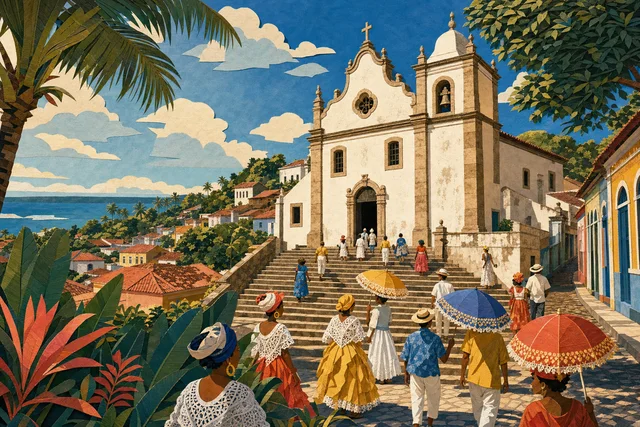
17th century temple built by brown men and linked to one of the first Brazilian devotions to Our Lady of Guadalupe.
1 sources and traceabilityVerified 2026-07-28
01

Brazil's first Guadalupe church

The Church of Nossa Senhora de Guadalupe in Olinda is the first in Brazil under the invocation of the patron of Mexico and South America. That alone makes it unusual: a Spanish devotion in a Portuguese colony.

The temple was built between 1626 and 1629 through the devotion of free and enslaved mixed-race men of the then village of Olinda. This is therefore another brotherhood church rather than a parish created by authority.

The explanation for the Spanish choice is political: in those years Portugal belonged to the Spanish monarchy, and a preference for a Spanish devotion follows from the Iberian Union.

To this day the church houses the Brotherhood of Nossa Senhora de Guadalupe and, until 1854, also hosted the Brotherhood of Nossa Senhora do Bom Parto, later transferred to the São Sebastião church.

Come for that political and religious fork, rarely spelled out in guidebooks.

A practical conclusion: plan this stop deliberately, because its value emerges through the context of the town rather than through a single striking object.

02

1626-1629, 1854 and today

The church was raised between 1626 and 1629, when Portugal formed part of the Spanish monarchy, which explains a devotion from the Hispanic world.

The initiative came from free and enslaved mixed-race men gathered in a brotherhood: the same mechanism that produced the Amparo and Rosário churches, showing how communities won a place in the town.

Until 1854 the building also served as headquarters of the Brotherhood of Nossa Senhora do Bom Parto, which then moved to the São Sebastião church.

The Guadalupe brotherhood still exists at the church, so the institution older than the building continues to work.

Keep the chronology: a structure almost four centuries old, a change of brotherhoods in the nineteenth century and community continuity today. Note that dates of construction, consecration and completion of finishes often diverge in Brazil, so official sources may give different years for the same building.

03

A simple façade and one tower

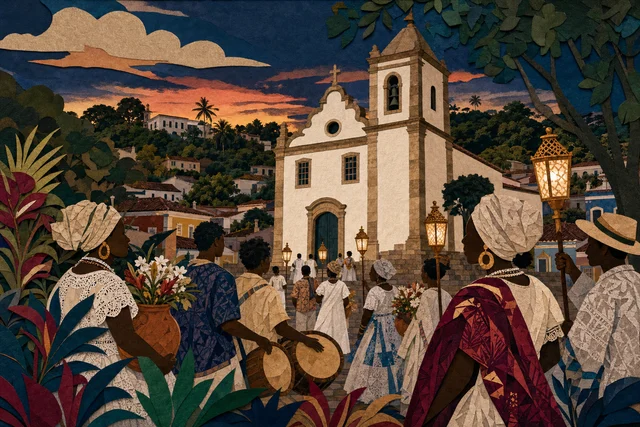
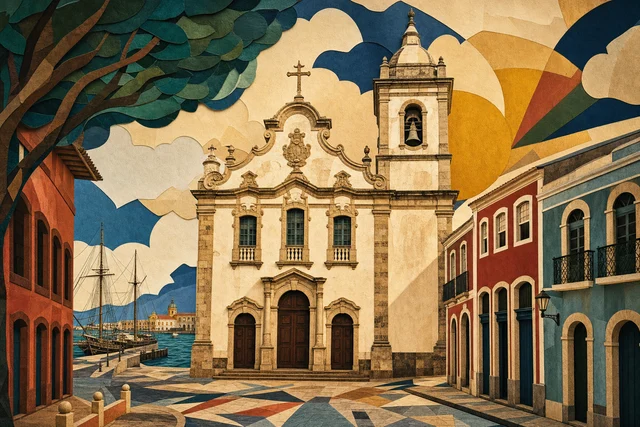
The façade is plain, with a single bell tower and three doors leading to the main nave plus two more into the sacristy. It is a sober, rational scheme typical of brotherhood churches.

That simplicity is not poor taste but a reflection of means: it was built on the contributions of a community without access to the elite's large donations.

Inside, look at the chancel and how the space is organised for processions and brotherhood meetings.

The five doors are a practical detail, since they kept people moving on feast days when the church filled.

There is no museum display: this is a working parish church with a living brotherhood.

Keep in mind that the tropical climate defines everything, since humidity, salt and heavy rain dictate what survives and how often restoration is needed.

04

How to look closely

Start with the façade and count the doors: three into the nave and two into the sacristy, a rare configuration explained by the practice of festivals.

Note the dedication, because Guadalupe is a Mexican devotion and its presence in seventeenth-century Olinda ties to the politics of the Iberian Union.

Look for traces of brotherhood life, such as plaques, insignia and meeting spaces, always present in churches of this kind.

Compare this temple with Amparo and Rosário: three brotherhoods, three buildings, three social positions in one town.

And remember the church is active, with hours set by parish life rather than tourist flow.

05

The Guadalupe district

The church gave its name to the Guadalupe district, typical of Olinda, where blocks are often named after the temples they formed around.

The district lies in the historic area, away from the densest tourist flow, and is therefore calmer, with more everyday life.

Around it is the ordinary urban fabric of sloping streets, coloured houses and small shops.

From here it is easy to climb to the Alto da Sé or descend to the lower town and the markets.

During Carnival the district comes alive and joins the routes of street groups. It is worth walking the block on a weekday and at the weekend, because Olinda has two rhythms and tourist flow changes how the streets feel.

06

The Iberian Union and pardo brotherhoods

The choice of a Mexican devotion follows directly from politics: between 1580 and 1640 the Portuguese crown was held by the Spanish Habsburgs, and religious preferences reflected that link.

The second layer is social: the church was built by free and enslaved mixed-race men, that is, by people colonial society placed between the white elite and enslaved Africans.

Brotherhoods gave them an instrument of legal association, mutual aid and public presence, and every such temple is the material trace of that strategy.

It is worth remembering that the participation of enslaved people in building did not mean equality within the brotherhood, since hierarchies were reproduced there too.

Looking at the building with both lines together is the honest approach.

07

Planning the visit

This is an active church, so visits happen outside services and hours should be confirmed in advance, because parishes of this size keep unstable schedules.

Allow twenty minutes: the temple is small and its value lies in the history rather than the size of any collection.

It fits well into a route of brotherhood churches: Amparo, Rosário dos Homens Pretos and Guadalupe together fill half a day and give a coherent picture.

Dress for entering a working church and confirm whether photography is allowed.

If your visit coincides with a brotherhood festival, stay, because living practice explains the building better than any label.

Build a day of three or four stops with pauses, because trying to see more in Olinda usually ends in fatigue.

08

Getting there and access

The church lies in the Guadalupe district of Olinda, about seven kilometres from central Recife. You can arrive by taxi or bus with a walk.

The streets slope, the paving is old and uneven and the entrance has steps, so accessibility is limited and should be confirmed with the parish.

There is little shade on the way, and in hot hours the approach tires you.

Parking in the district is limited, especially on event days.

In the evening the area is quiet, so plan your return. Plan your return in advance, because transport is harder to find in the historic part after dark.

09

Where to go next

The logical continuation is the Amparo and Rosário dos Homens Pretos churches, which with Guadalupe form a brotherhood route.

Climbing leads to the Alto da Sé with its cathedral, sacred art museum and seminary; descending leads to the markets and the Mamulengo Museum.

If architecture interests you, add the São Francisco convent with its tile cycle and the São Bento monastery.

For a rest there are cafés in the historic centre.

And keep the contrast with old Recife for another day.

Remember that upper and lower town work differently, with churches and views above and markets and daily life below.

10

Verified facts

Every fact below is linked to this profile’s source codes.

Location
Guadalupe · Olinda
OLINDA_CHURCH
Listed address
Praça Miguel Canuto, s/n
OLINDA_CHURCH
Documented focus
17th century temple built by brown men and linked to one of the first Brazilian devotions to Our Lady of Guadalupe.
OLINDA_CHURCH
Evidence basis
Identity, location and cultural relevance are supported by primary evidence.
OLINDA_CHURCH

Original Meu Recife editorial copy based only on this profile's source codes. It does not reproduce third-party text in full or turn a community-guide opinion into fact.

11

Before visiting

This is a working parish church with a living brotherhood: visits happen outside services and parishes of this size keep unstable schedules, so confirm the hours in advance. The church is small and twenty minutes is enough. It makes sense to see it together with the Amparo and Rosário dos Homens Pretos churches.

Reference address
Praça Miguel Canuto, s/n, Guadalupe, Olinda — PE
Religious heritage
30–60 min
What can change
Hours, tickets, accessibility and temporary closures can change. Confirm with the official source before visiting.
12

Getting there

Coordinates cross-checked against multiple mapping sources

Reference address
Praça Miguel Canuto, s/n
District and city
Guadalupe · Olinda, PE
Verified coordinates
-8.008465, -34.856766
The interactive map will load as you scroll
Location map for Our Lady of Guadalupe Church
Coordinates cross-checked against multiple mapping sources · map © OpenStreetMap