Urban heritage · Recife / São José
São Pedro Courtyard

A square that barely changed
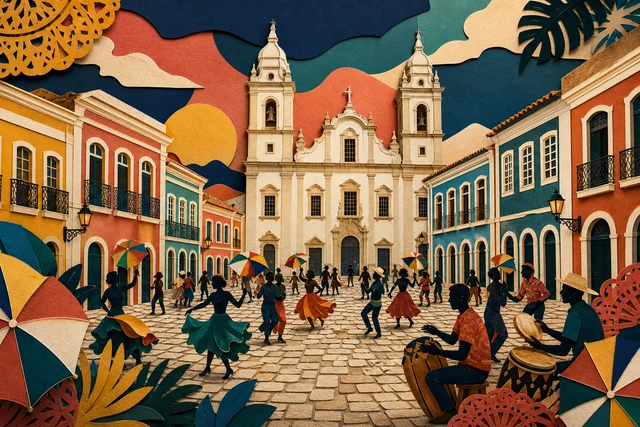
Pátio de São Pedro is a rare case in Brazil: an eighteenth-century piece of city that has reached us almost unchanged. The ensemble is formed by the Church of São Pedro dos Clérigos, the square itself and sixty-three further buildings, single-storey houses and townhouses. It is one of the country's most important baroque ensembles, protected by Iphan, and the church, considered one of the most monumental in Brazil, was among the first properties listed by the institute, in 1938. Yet the value of the place is not only architectural: it is an active urban stage, with processions, concerts and the daily commercial life of São José. Come ready to see two layers at once, baroque stone and today's use. In practice the square is not visited as a single object: a church, four cultural venues in former dwellings, surrounding trade and a programme all coexist, and your impression depends on how many layers you meet at once.
The eighteenth century, 1938 and now
The ensemble took shape in the eighteenth century around the Church of São Pedro dos Clérigos, and its plan, an enclosed square ringed by houses, survives almost intact. In 1938 the church became one of the first properties protected by Iphan, marking Brazil's first wave of heritage policy. In recent years Iphan invested around 7.3 million reais in restoration services for the property, work of recovery rather than remodelling. In parallel came the square's return to the city: the Pátio Criativo project arose from civil society itself, which organised to press the city government for coherent uses of the space. Two lines of biography, protective and public, remain active. Note the difference between the two lines: protection cares for the fabric of the building, while civic mobilisation cares for what the building holds.
What forms the ensemble
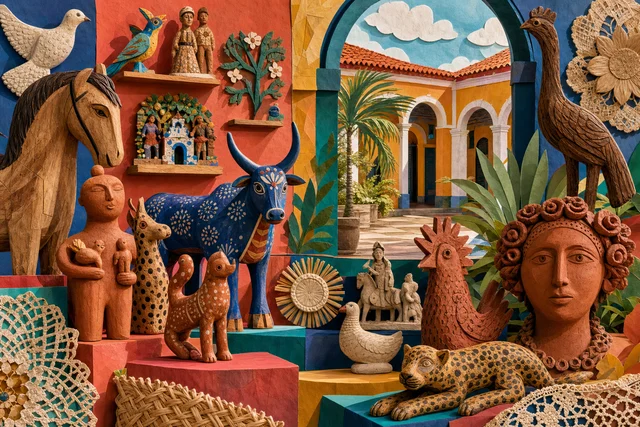
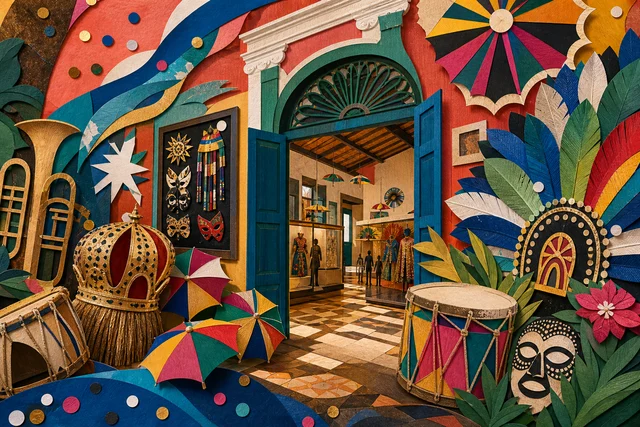
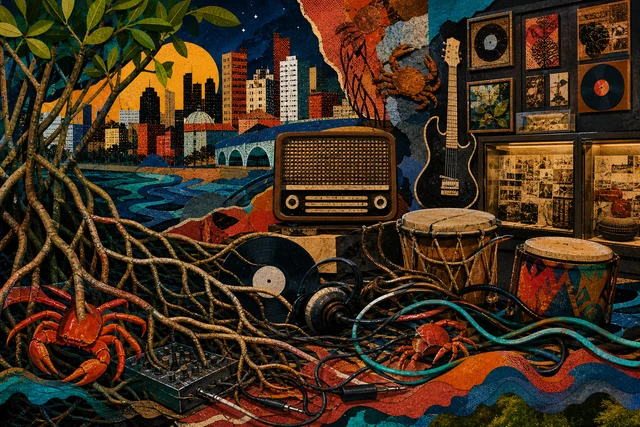
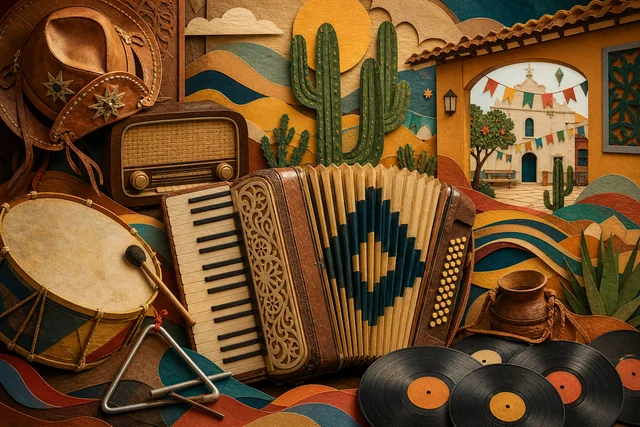
The core is the Church of São Pedro dos Clérigos, one of the most monumental in the country, with richly ornamented baroque façade and interior. Around it stand sixty-three buildings of different periods and heights, and it is their combination that creates the sense of an enclosed urban volume, hard to grasp from photographs. Municipal cultural venues now occupy those houses, among them the Luiz Gonzaga Memorial, the Chico Science Memorial, the Museum of Popular Art and Casa do Carnaval, so the square is at once monument and working cultural quarter. Another layer is the paving and open space used as a stage. There is no permanent display: the content is the houses, the institutions and the events. Read the square as a system: the church supplies the vertical, the houses form the wall and the paving works as the floor of a shared room.
How to look closely
Start with the geometry: walk the perimeter and notice how the closed ring of houses sets the scale and makes the church dominant. Compare the heights of single-storey houses and townhouses, because they reveal the social structure of the quarter in the eighteenth and nineteenth centuries. Study the church façade slowly, since the carving, portals and towers were designed to be seen from a particular point in the square, which is worth finding. Notice how cultural institutions occupy former dwellings, because that is the mechanism by which the city keeps the block alive. And see the square at night, when lighting changes its character entirely.
São José around it
The square sits in São José, the historic commercial heart of Recife, beside the São José market and a dense grid of streets selling everything from herbs to fabric and tools. That setting matters: the baroque ensemble does not stand in a heritage park but amid working commerce, which is why it stays alive. Walk from the square to the market and back to feel the shift from the quiet of an enclosed courtyard to the noise of the stalls. By day the district is dense and busy; at night it empties quickly except on programme days, when concerts and processions fill the square. Square, church and market explain Recife better than any single museum.
Whose square is it
The ensemble lives with a permanent conflict: it is monument, tourist attraction, cultural quarter and place of everyday life at the same time. Pátio Criativo grew precisely out of demands from residents and cultural workers for consistent uses rather than a space idle between festivals. It is worth remembering that the baroque opulence of the church was raised in a colonial society whose wealth came from a sugar economy built on enslaved labour, and that proximity of festive façade and hard economy runs through the whole historic centre. There is also the question of balance, because the more the square works as a stage for events and tourists, the greater the pressure on residents and small trade around it.
Planning the visit
Allow at least an hour even without entering the museums: walk the perimeter first, then step into the church if it is open, and only then choose the institutions. The four cultural addresses in the surrounding houses keep different hours, and checking them beforehand avoids building a route blind. A weekday morning is the best moment, when the district lives its commercial life and the square is still calm. To see it as a stage, come on programme days, prepared for crowds. And combine the visit with the São José market, without which the picture of the quarter stays incomplete. To see the church interior, plan around its own schedule, since access depends on services.
Getting there and access
Pátio de São Pedro lies in São José, in the historic centre. From Marco Zero it is fifteen to twenty minutes on foot, bus routes pass nearby and driving is uncomfortable, with narrow streets, dense traffic, limited parking and closures on event days. The square itself is level, but the paving is old and uneven, and entrances to the historic houses and the church often have steps, so accessibility at each institution should be confirmed for your date. There is little shade, so in the hot hours prefer the morning or late afternoon and bring water with you.
Where to go next
The continuation is in the houses around you: the Chico Science Memorial at 21, the Luiz Gonzaga Memorial at 35, Casa do Carnaval at 38 and the Museum of Popular Art at 49. Together they offer four entrances to one subject, how the city keeps popular culture. Then walk down to the São José market to see that culture in commercial form. If time remains, continue to old Recife for Paço do Frevo and Torre Malakoff, or to the Cinco Pontas fort and the City Museum. For contrast with the baroque, visit the Teatro de Santa Isabel.
Verified facts
Every fact below is linked to this profile’s source codes.
- Location
- São José · Recife REC_VISIT · REC_CULT_DATA
- Listed address
- Pátio de São Pedro REC_VISIT · REC_CULT_DATA
- Documented focus
- Historic urban complex organized around the São Pedro dos Clérigos Concathedral and houses occupied by popular culture facilities. REC_VISIT · REC_CULT_DATA
- Evidence basis
- Identity, location and cultural relevance are supported by primary evidence. REC_VISIT · REC_CULT_DATA
Original Meu Recife editorial copy based only on this profile's source codes. It does not reproduce third-party text in full or turn a community-guide opinion into fact.
Before visiting
The four cultural addresses in the surrounding houses keep different hours, so check before you set out rather than planning the route blind. The church is not always open and the paving is old and uneven, so wear stable shoes. There is little shade on the square, so in hot hours come in the morning or late afternoon.
- Reference address
- Pátio de São Pedro, São José, Recife — PE
- Urban heritage
- 30–90 min
- What can change
- Hours, tickets, accessibility and temporary closures can change. Confirm with the official source before visiting.
Getting there
Coordinates cross-checked against multiple mapping sources
- Reference address
- Pátio de São Pedro
- District and city
- São José · Recife, PE
- Verified coordinates
-8.067042, -34.878986