Religious heritage · Olinda / Alto da Sé
Pernambuco Museum of Sacred Art — MASPE

Sacred art in the bishops' palace
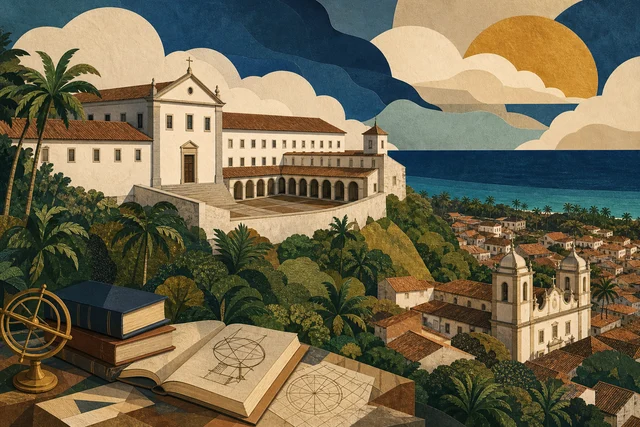
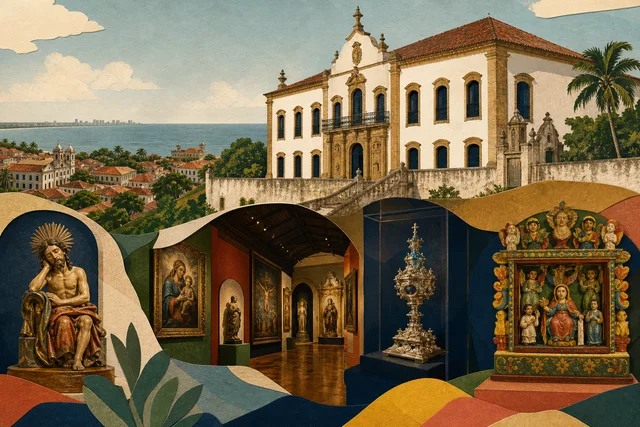
The Museum of Sacred Art of Pernambuco opened in 1977 in the former Palace of the Bishops of Olinda, a building raised on the first installations of the first Casa de Câmara e Cadeia, the town chamber and gaol. That alone makes the address singular: municipal, punitive and ecclesiastical power occupied the same ground in succession.
The building served as an episcopal palace from 1676 and, among the functions it held across almost five centuries, even sheltered soldiers during the Second World War.
The collection exceeds four thousand pieces, with works, vestments and liturgical objects from the sixteenth century to the present. Its highlight is a group of early erudite images, polychrome and gilded, dated to the sixteenth century.
Another value lies in the finishes themselves: eighteenth-century Portuguese azulejos and nineteenth-century English tiles survive in the interiors.
Come for the density: five centuries of urban history and the state's finest sacred art collection in one building.
A practical conclusion: plan this stop deliberately, because its value emerges through the context of the town rather than through a single striking object.
1676, 1977 and five centuries of uses
It helps to count from 1676, when the building became an episcopal palace, that is, from the creation of the bishopric of Olinda, which changed the town's standing.
Before that the site held the first installations of the first Casa de Câmara e Cadeia, combining municipal administration and gaol, a common arrangement in a colonial town.
Across almost five hundred years the building changed function many times, including quartering soldiers in the Second World War, and each use left marks in the plan.
In 1977 the Museum of Sacred Art of Pernambuco opened here, bringing together scattered collections of religious art from the state.
Reading the house, keep the chain in mind: chamber and gaol, bishops' palace, military billet, museum. Note that dates of construction, consecration and completion of finishes often diverge in Brazil, so official sources may give different years for the same building.
What the collection holds
The collection exceeds four thousand pieces and spans the sixteenth century to the present, with sculpture, painting, vestments and objects of worship.
Its core is the group of early erudite images, polychrome and gilded sculptures of the sixteenth century, rare in Brazilian collections for their condition.
Another line is the relation between erudite and popular, since the museum shows both works commissioned for churches and pieces from local workshops.
The interiors belong to the display: eighteenth-century Portuguese azulejos and nineteenth-century English tiles survive in the palace rooms.
As in any large holding, not everything is shown at once and the selection changes.
Keep in mind that the tropical climate defines everything, since humidity, salt and heavy rain dictate what survives and how often restoration is needed.
How to look closely
Start with the sixteenth-century images, because polychromy and gilding on wood need particular conditions and their survival in the tropics is the result of long restoration work.
Compare erudite and popular sculpture: proportions, the treatment of faces and the materials show how one religion was served by two traditions of craft.
Study the tiles, because eighteenth-century Portuguese and nineteenth-century English tilework are two separate import streams and reveal changing economic ties of colony and empire.
Notice the vestments and liturgical objects, since textile and metal survive worse than wood and what remains usually has a story of its own.
And keep the palace plan in mind: these rooms were not designed for a museum, and the route shows it.
Alto da Sé around it
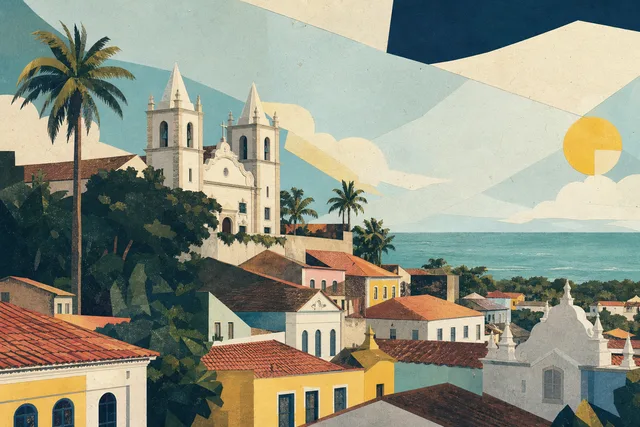
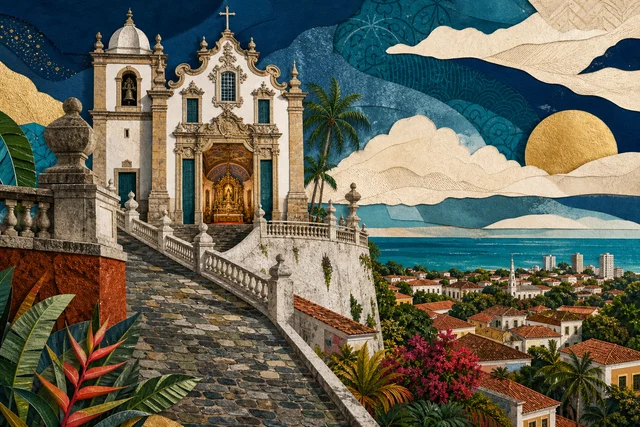
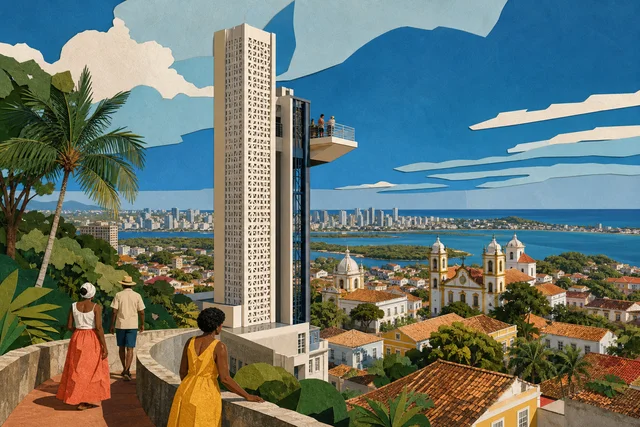
The museum stands at the Alto da Sé beside the cathedral and Olinda's main viewpoint, the town's most visited point.
The setting helps: cathedral, Misericórdia, seminary and museum fit into a single walk along the hilltop.
Food stalls and crafts operate around it, and in late afternoon the sunset crowd arrives.
The descent leads to the other churches and the lower town, so it works well as the start of a route.
Allow for terrain and heat: riding up is the sensible choice. It is worth walking the block on a weekday and at the weekend, because Olinda has two rhythms and tourist flow changes how the streets feel.
Who gathered it and what is shown
Sacred art in Brazilian museums almost always comes from working churches, and the question of how pieces entered a collection is legitimate: some were transferred by parishes, some rescued from destruction, some purchased.
It is worth remembering that the wealth which paid for these works came from a colonial economy based on enslaved labour, and that the craftsmen often remained anonymous.
The division between erudite and popular art is also a construction reflecting hierarchies of taste, and contemporary museums increasingly question it.
Finally, the building housing the museum was itself a seat of power, first municipal and punitive, then ecclesiastical.
Holding those lines alongside admiration for the work is the honest approach.
Planning the visit
Confirm the hours in advance, because museum schedules in Olinda change and festivals affect access.
Allow forty minutes to an hour: the collection is large but the display occupies historic rooms and does not need a full day.
It pairs naturally with the Sé, the seminary and the Misericórdia, all next door.
If carving and polychromy interest you, move slowly through the rooms with sixteenth-century images, the strongest part of the holdings.
And keep time for the palace itself, because tiles and plan are as much on display as the sculpture.
Build a day of three or four stops with pauses, because trying to see more in Olinda usually ends in fatigue.
Getting there and access
The museum sits at the Alto da Sé in the upper historic centre of Olinda, about seven kilometres from central Recife. The sensible approach is to ride up and walk down.
The building is historic, with steps, thresholds and stairs between levels, so accessibility is limited and should be confirmed in advance.
The paving is uneven and slippery after rain, so wear firm shoes.
Parking at the top is limited, especially at weekends and around sunset.
In the heat the climb is demanding; prefer the morning. Plan your return in advance, because transport is harder to find in the historic part after dark.
Where to go next
The nearest stops are the Sé cathedral, the Misericórdia church and the Seminary of Nossa Senhora da Graça, all on the same hilltop.
Descending brings you to the Museum of Contemporary Art in the former Aljube and to the Regional Museum of Olinda.
For another register there are the markets: Ribeira with its craft workshops and Eufrásio Barbosa with the Mamulengo Museum.
The São Bento monastery with its gilded carving completes the sacred art theme.
And keep the panorama of the town for sunset.
Remember that upper and lower town work differently, with churches and views above and markets and daily life below.
Verified facts
Every fact below is linked to this profile’s source codes.
- Location
- Alto da Sé · Olinda OLINDA_MON
- Listed address
- Rua Bispo Coutinho, 726 OLINDA_MON
- Documented focus
- Museum in the former Bishops' Palace, with imagery, paintings, liturgical objects and erudite and popular sacred art. OLINDA_MON
- Evidence basis
- Identity, location and cultural relevance are supported by primary evidence. OLINDA_MON
Original Meu Recife editorial copy based only on this profile's source codes. It does not reproduce third-party text in full or turn a community-guide opinion into fact.
Before visiting
Museum schedules in Olinda change and festivals affect access, so confirm the hours in advance. Allow forty minutes to an hour and keep time for the palace itself, because the eighteenth-century Portuguese and nineteenth-century English tiles are as much part of the display as the sculpture. The climb is steep, so arriving by car is easier.
- Reference address
- Rua Bispo Coutinho, 726, Alto da Sé, Olinda — PE
- Religious heritage
- 30–60 min
- What can change
- Hours, tickets, accessibility and temporary closures can change. Confirm with the official source before visiting.
Getting there
Coordinates cross-checked against multiple mapping sources
- Reference address
- Rua Bispo Coutinho, 726
- District and city
- Alto da Sé · Olinda, PE
- Verified coordinates
-8.013335, -34.850257